

MA in Visual Anthropology
overview
Our MA in Visual Anthropology suits a wide range of interests and experience levels in anthropology and audio-visual practice. It offers a unique combination of anthropological theory with practical training in filmmaking, editing, photography, sound recording and sensory ethnography.
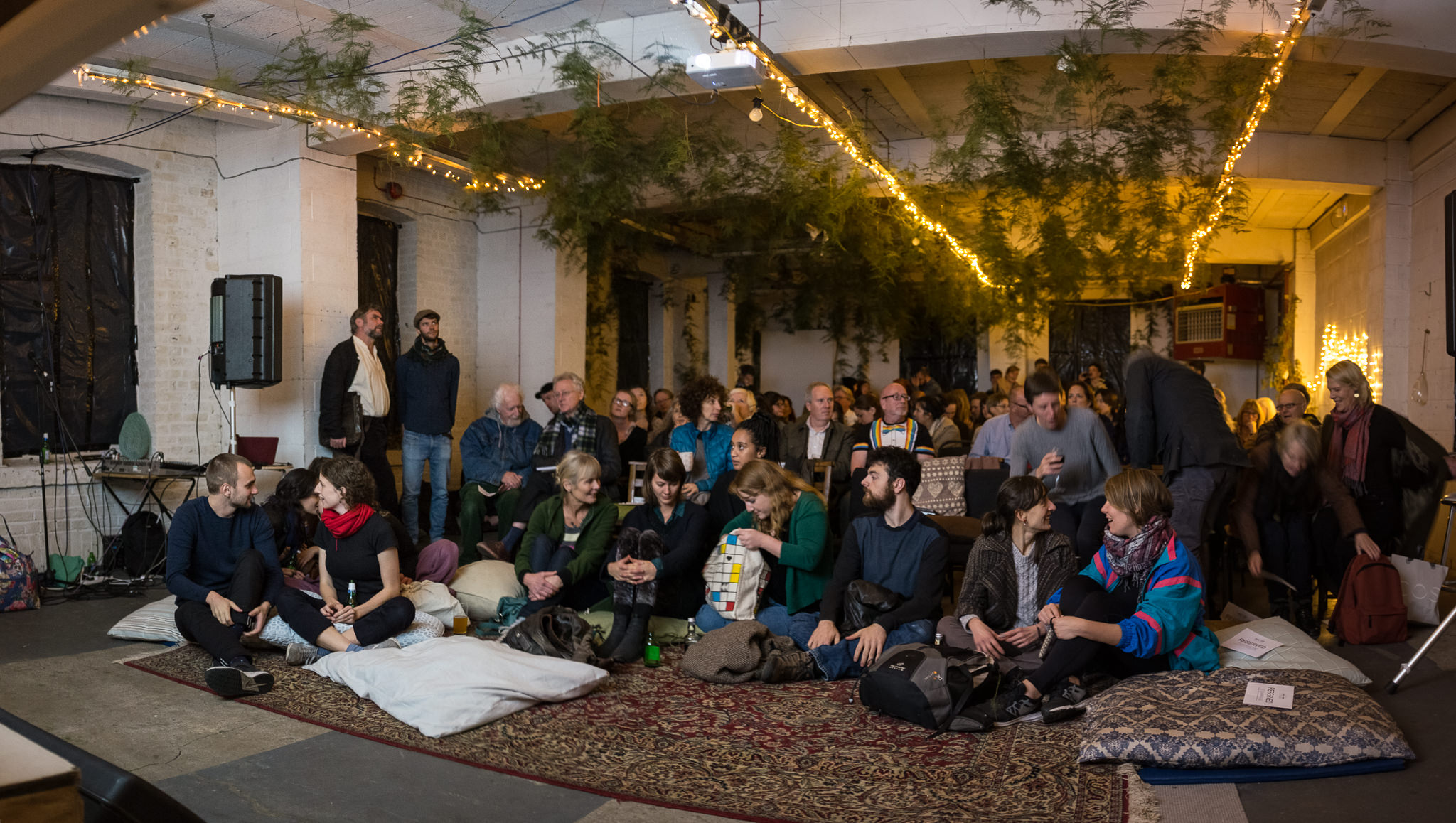
Within our classes, we regularly host guest speakers including professional filmmakers, photographers, visual and sound artists, who provide an insight into their creative fields.
During the programme you’ll produce an selection of short films, photographic essays and soundscape recordings, which constitute a credible portfolio for future commissions and employment.
practice-based teaching
Take part in lectures, workshops and practical exercises. Each lecturer's teaching is based on their unique and pioneering research using anthropology and multimedia practice.
Equipment and support
You will have access to professional-standard filmmaking, photography and sound recording equipment, with one-to-one technical support from a team of AV technicians.
Cutting-edge facilities
Use our edit suites to complete practical assessments. The GVCA Lab includes a screening room equipped with a 4K cinema projector and 5.1 surround sound system. A dedicated technician delivers personalised editing advice.
A powerhouse of creativity
Manchester is a creative, dynamic and cosmopolitan city noted for being home to the MediaCity, the UK’s leading hub for media, creativity and innovation. We have unparalleled links to industry in Manchester and beyond, allowing you to follow your own career ambitions.
Semester 1
Follow these classes from September to December:
Ethnographic Documentary
Screening Culture
Anthropology of Vision, Senses and Memory
Key approaches in Social Anthropology or other optional courses
Semester 2
Follow these classes from February to May:
Images, Text and Fieldwork
Elemental Media: Documentary and Sensory Practice
Beyond Observational Cinema
Summer semester
From June to August, go on fieldwork and create your independent ethnographic project developed over the year with the support of your dissertation supervisor
Final project
In September, edit your ethnographic media project and write a short dissertation, in Manchester or at home. Organise a final event with your classmates in October
Course details
semester 1
Overview
The craft of ethnographic filmmaking allows images and sounds to tell stories of human experience without relying on written text. Ethnographic Documentary will introduce you to foundational technical skills in camera operation and sound recording for furthering technical training in the MA in Visual Anthropology programme. The course encourages students to use filmmaking for an area of anthropological research of their own interest. It is designed for students who have different levels of technical expertise (including no prior experience).
Learning outcomes
- Basic practical understanding of mirrorless system camera, location mono sound recording equipment, Adobe Premiere CC editing software.
- Confidence with a filmmaking workflow: research and preparation, filming and audio-visual production, post-production or ‘editing’, exporting and presentation.
- Knowledge of ethnographic fieldwork approaches, including ethical considerations.
- An understanding of how ethnographic filmmaking can offer a unique contribution to anthropological knowledge production.
Assessment
Work in a small team to produce a short documentary.
Sample film: Fetch it t’Here by Matty Feurtado and Hannah Thomas-Byrne (2023)
Overview
This course examines the relationship between documentary filmmaking and anthropology through tracing the historical development of documentary styles. You will explore the dialogue between film practices and theoretical approaches of anthropology, and the contexts of different styles of filming.
Learning outcomes
- Understand the histories of colonial and postcolonial debates of anthropology and film.
- Exposure to a range of classic films and key critical texts
- They will learn how to depict and recognise different styles of ethnographic filmmaking.
- Identify social and political conditions surrounding the production of images in research and as ethnographic representation.
Assessment
Write an essay based on a selection of recommended documentaries.
Overview
This course introduces the human body as the foundation of visual perception, sensory experience and memory. Vision, senses and memory are not reducible to the mechanics of cognition, perception or biology insofar as they are social, political and historical phenomena that change over time and in relation to different environments. Approaches explored in the course consider the relationship between the human eye, brain and body in relation to things such as language, art and the imagination; media, advertising and technology; race, gender and power; everyday life and performance; architecture and cities; war, illness and death.
Learning outcomes
- To understand the role of the imagination and perception in developing and communicating ideas and knowledge.
- To equip students with techniques and sensibilities related to phenomenology to compliment other modes of anthropological understanding.
- To develop critical skills and problem-solving approaches that can be applied outside the of anthropology, relevant to organisations, from private companies to community organisations to NGOs etc.
- The ability to conceive, communicate and realise ideas through images and other media, building a skillset and confidence when working across a range of situations.
Assessment
Write an essay on the themes of the course.
semester 2
Overview
The course is organised around themes of air, water, earth, and fire as subjects and means for linking multi-modal, visual and audio media methods and sensory practices to anthropological research about urban ecology. This is an experiential learning course directed towards providing hands-on experiences of the creation and interpretation of images and sounds and the various possible ways in which they may be applied and combined in anthropological enquiry. It combines critical investigation and creative exploration, introducing students to methods in sensory media, giving them the opportunity to create a collaborative media project.
Learning outcomes
- Skills in analysing through making things, learning how to combine different materials, and learning how to translate a concept into a method.
- Skills in documentary photography, photo-elicitation, field recording, sound walking and how to work with different forms of data and archive sources. Materials generated will include sound recordings, photographs, found images, maps, drawing, writing (diaries, blogs, essays) and film.
- A consideration of what it means to move around the world now, in relation to both climate and social issues. By teaching skills for changing the environment, the course is not just about description but about acting on the world.
Assessment
Create a portfolio of media and a short piece of writing.
Sample mixed media project: Flow: Sensing Oil on the Milford Haven Waterway by Jacob Wood (2021).
Overview
In this course you will be encouraged to consider a more diverse range of film-making approaches compared to the Ethnographic Documentary module. Some of these could be considered complementary to observational cinema, whilst others are quite different, even opposed. Genres touched include the essay film, ethnofiction, hybrid, reflexive, collaborative and participatory documentaries. Ultimately, the course explores the blurred boundaries of documentary as a fluid genre, playing with fiction and ambiguity, from Grierson’s early definition of “creative treatment of actuality” to contemporary experiments with meta-cinema.
Learning Outcomes
On completion of the course, students will have
- Improved understanding of the range of filmic genres that can be used within ethnographic documentary.
- Competencies in the use throughout the course of the semi-professional film equipment and editing software provided by the GCVA.
- Improved technical skills in all aspects of documentary film production, through targeted workshops, delivered by guest lecturers.
- Increased understanding of the ethical and legal aspects of ethnographic filmmaking.
- Improved level of employability through all of the above and via specific workshops by industry professionals.
ASsessment
Work in a small team to produce a medium-length documentary over the Spring break.
Sample film: Your Truly by Charlotte Hoskins, Christoper Murray and Maddi Barber (2017).
Overview
This course aims to introduce foundational approaches and methods for designing and carrying out a short research project in anthropology and encourages students to think creatively, systematically, and pragmatically about how research is constructed. The course covers aspects of project development, from refining research questions to fieldwork methods, forms of data collection, analysis, communication and representation of the findings and insights.
Learning outcomes
- Plan, carry out and write up a small research project.
- Learn and develop a range of theoretical and practical approaches, including fieldwork techniques of participant observation, interviewing, visual and sensory methods, digital anthropology and experimental approaches to research and representation.
- Transferable project management skills: produce collaborative media, clear communication of research through written findings and oral presentations.
Assessment
Write a short final essay based on a small research project, including audio-visual materials.
Sample mapping project: A Students’ Guide to Manchester by Julia Brow (2022).
Final Semester
Overview
Learning outcomes
- Integrating textual, visual, and sound media into the production and presentation of research.
- Ability to develop an audiovisual research project informed by anthropological analysis.
- A developed awareness of the personal and ethical issues inherent in social research involving visual, and sound media.
- The experience of undertaking fieldwork for ethnographic research.
Find examples of MA Final Projects in the Showcase section
Based on a typical year. Our offer of courses may vary depending on staff availability, please refer to the University of Manchester pages for up to date information.
equipment
We provide ample choice of professional video, photo and sound kit to enable you to carry out your projects to the highest quality standards.
Carry out practical training in small groups, then set out on your own to do fieldwork during the summer with one of our cameras and sound kits.
Additional specialised equipment for VR, animation, and a fully equipped photographic darkroom are also available.
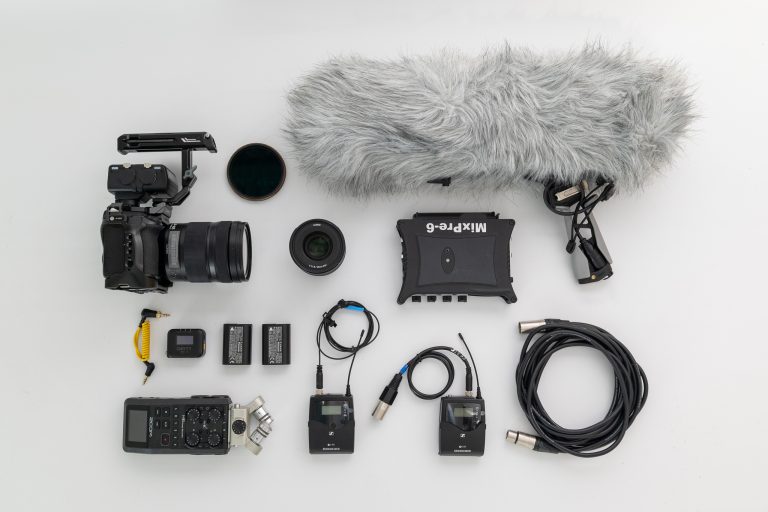
A Panasonic S5iiX is available for each student
A versatile 24-105/4 zoom and a 50/1.8 for low light
Sound Devices MixPre 6 II for high quality recordings
Sennheiser radio microphones, shotguns, plus stereo pairs for ambiences and even contact microphones
Facilities
Edit your films, photographic essays, soundscape compositions or other media in our dedicated lab with 12 editing stations equipped with Mac Studio computers, 4K screens and audio monitors.
Watch one of the more than 3000 films from our GCVA library in our screening room with cinema 4K projector and surround sound system.
And after you graduate you can still use equipment and editing facilities for your projects (when they are not taken up by teaching).
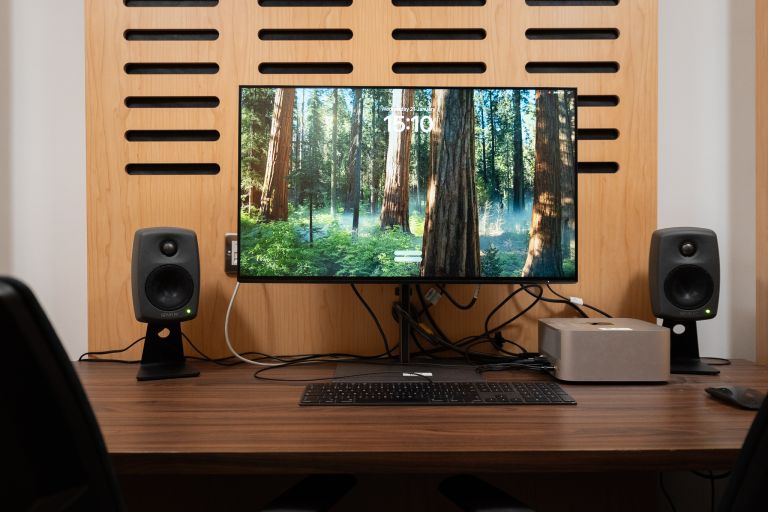
Genelec 8010A monitors
Mac Studio Ultra computers with Adobe Creative Cloud suite
A 27" screen with UHD resolution to edit your projects
MAVA alumni say
The MA is possibly the most fun bit of education I have ever done. Aside from learning the basics of hands-on film-making, it is a very different way of doing anthropology.
The MA in Visual Anthropology has been central in shaping my theoretical, methodological and practical work as an anthropologist.
There is so much to gain from this course. Before I started I had never even picked up a film camera, now my final film has gone on to win several awards. It’s opened my eyes to the different ways research can be done
I became part of a community of peers and tutors that were genuinely interested in each other, and empathetic, offering support and critical views to each other in respectful and sensitive ways. The programme encouraged us to develop projects collaboratively and learning to assume different roles, negotiating and learning how to overcome obstacles as an individual and as a team.
The MAVA programme taught me how to work collaboratively with participants and explore ways to situate our creative process within anthropological significance. Above all, what I value the most from the programme is the time spent with world-class professors and fellow students from across the globe.
When I took my first visual anthropology course, my inspiration grew as I experienced the satisfaction that comes with visualizing human themes through a camera. I am still applying these lessons today as a cinematographer for Mission Margraten Plus, a non-profit that takes US World War II veterans to the Netherlands to participate in commemorative ceremonies.
What I’ve been exposed to in this program goes beyond the technical layers involved in making a documentary film, but also how one approaches the world in an attempt to understand it before pressing ‘record.’ And that to me is the essence that sets this programme apart. It is something that, once encountered, cannot be unseen.