

Discover our offer of courses for different training and skill levels
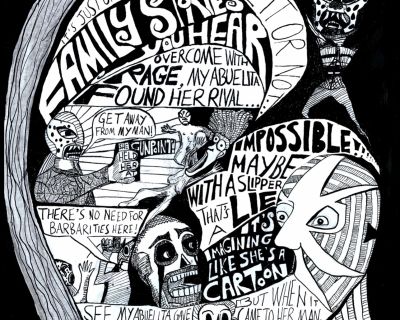
Breaking Tezcatlipoca
As a graphic ethnography of Mexican family stories, this comic book is an overview of a family mythos about (great-)grandparents and the multiple ways in which family members conceptualise memory and perceive reality through family storytelling. Working within the realms of auto-ethnography, comics theory and the recent so-called “graphic narrative turn” in Anthropology, this project attempts to bring together a partial view of multiple perspectives in order to render visible the ambivalent and uncertain realities of Mexican family myths.
Graphic
MA
2019
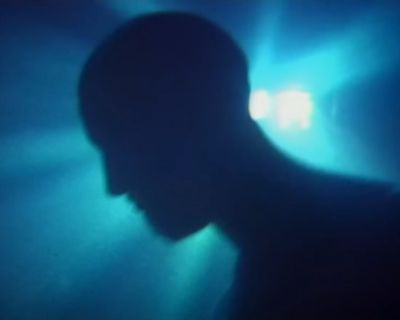
Ciao Brenda Ciao
A documentary centred on Brian King—known by his drag persona “Brenda”—and Gerry Potter, two pivotal figures in Liverpool’s LGBTQ+ theatre and performance scene. As Brian’s health declines due to HIV/AIDS, the film follows Gerry as he struggles to negotiate the fragile boundary between life and art, confronting the loss of a collaborator, performer and close friend.
Video
Staff
1995
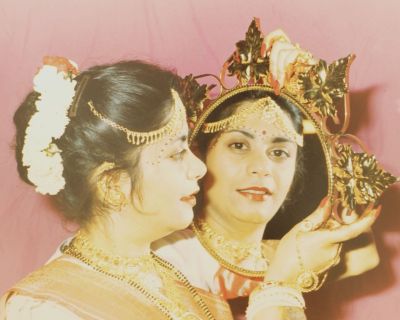
Sahan Shakti (Fortitude)
Hina is a wife, mother and ‘twice migrant.’ For the past 38 years, she has dedicated herself to becoming the ‘perfect Indian wife.’ But after a lifetime of trying, she is now ready to find out who she really is. Exploring themes of migration, gender and arranged marriage, Sahan Shakti is a multi-award-winning ethnographic documentary following the life of Hina, a 60-year-old twice-migrant as she begins to rebuild her life post-divorce.
Video
MA
2023
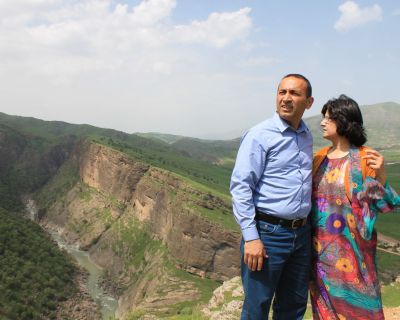
Haraka Baraka
Exploring diaspora and migration dynamics, this film follows my parents’ return to their homeland in Iraqi Kurdistan after having lived in the Netherlands for over 20 years. It is as much about the reshaping of normative frameworks as it is about my parents’ relationship, which I approach in a self-reflexive manner.
Video
MA
2014
Sich Abhängen | Holding On
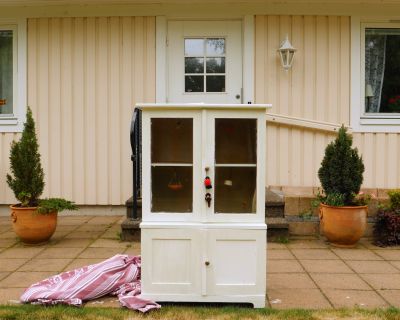
Using an old dollhouse as a visual metaphor for refurnishing the memories of her life, the film follows Lisbeth Svenson (my grandmother) and her son Anders Runesson (my father) as they begin to explore the impacts of grief as it reverberates through a family in the south of Sweden.
Video
MA
2022
I’m Lee not Emily
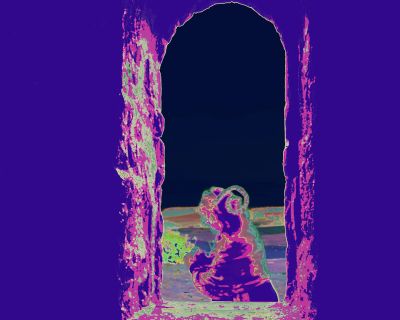
An ethnofictional film on inhabiting a trans and disabled body while navigating queer polyamory, community care, and imagination. Set against the backdrop of a transphobic healthcare system and the rising tides of fascism in the UK, the film follows Lee, as an abundance of love shared among partners begins to fracture under the weight of mental health struggles imposed by systemic neglect.
Video
MA
2025
Grandma’s Hands
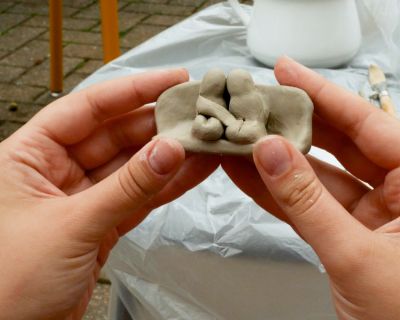
In 1953, Claire Leven traveled to Florence, Italy to study the lost-wax process of sculpting. After her passing in 2021, her granddaughter decided to do the same, embarking on a journey to discover more about her grandmother’s mysterious artistic past.
Video
MA
2022
In Touch
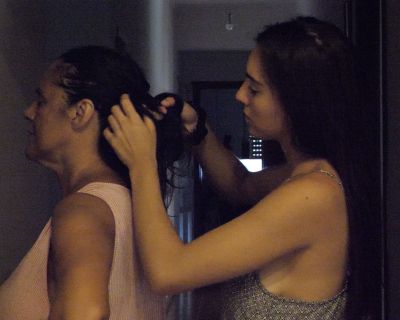
Centring the daughter’s experience, In Touch follows and examines three complex mother-daughter relationships from three distinct cultural settings that share one commonality: a daughter who has studied and, crucially, chosen to remain abroad. Independence, groundlessness, possibilities: experiences indicative of the emerging adult reality.
Video
MA
2022
A Home Made Strange
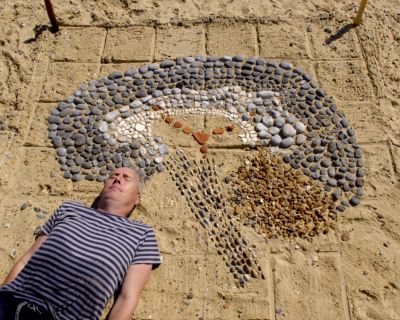
After my father, Ian, suffered two brain hemorrhages in 2012, the world as he knew it became completely transformed. He faces long-term neurological problems related to speech, memory, comprehension and fatigue. In the film we explore how his relationships with people and everyday life has changed, how he actively continues to make sense of his new perceptual and imaginative world.
Video
MA
2016
Ten by Ten
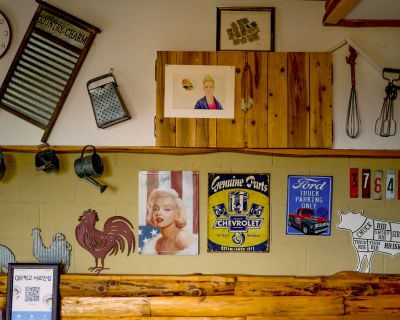
A documentary exploring themes of food, home, and identity through the story of Jessica who, with the help of her husband Dongseop, opened an American-style restaurant out of her home on Jeju Island, South Korea.
Video
MA
2021