
Please listen with headphones – recording uses binaural stereo microphones which require headphone playback to achieve their full effect
This project is an attempt to understand some of the huge changes that take place in the life of one woman, Soozie, who after suffering from profound hearing loss for over 20 years, has had a good level of hearing restored through undergoing cochlear implant (CI) surgery. A CI is a device that is implanted inside the recipient’s head and consists of a series of electrodes that are attached directly to the aural nerves in the brain. These electrodes are then electronically stimulated via an external microphone/processor unit, essentially allowing for the damaged portions of a person’s ear to be bypassed.
Through spending time with Soozie, it is clear that the CI process not only transformed her sense of perception, but also profoundly transformed her sense of self and her relation to the world. A key focus of this work then becomes about addressing the existential value of hearing – a hearing that is about life, not just sound – and the ways that the CI process for Soozie not only greatly increased her ability to hear, but also opened up new possibilities for her life in general. When we begin to explore the CI process as an event with the capacity to produce a radical reorientation to the world – on a sensorial, as well as existential, social and imaginative level – we are presented with a problem ethnographically speaking, namely, how we might actually begin to apprehend, understand and represent these kinds of elusive, internal (emotional and imaginative) shifts in self-understanding. In this particular case, photography, painting and sound recording during fieldwork became a key site for opening up a provisional space where some of these issues could be made tangible, explored on a sensuous level, and be brought into dialogue with more traditional aspects of the research encounter.
When I met Soozie, she was engaged in creating paintings and photographs for an art exhibition in order to try and express some of the impact that her CI has had in her life. For her, a shift from darkness, to a world of bright, expressive colour became a key metaphor to help understand and express – both to herself, and to and others – some of these profound existential changes. The bright colours, swirls and sheer vibrancy of Soozie’s current artistic production, stand in stark contrast to the types of dark, troubled images that she has created in the past; and in this reawakening back into a world of ‘colour’, a trajectory through her struggles with deafness and subsequent re-integration back into social life as a vital space of possibility is opened up. The written part of the work (my MA thesis) presents a number of these images and discusses how creatively engaging with such expressive visual languages can contribute towards developing an anthropology that is more willing (and better equipped) to engage with people’s imaginative and interior worlds.
In the sound piece also presented here, we hear aspects of Soozie’s story alongside some of the sounds that have been important to her in her immediate acoustic environment. The sounds are taken mainly from soundwalks that we conducted together as a way of exploring her emotional relations to the world of sound around her. On these walks, I also gave her a much more powerful microphone that could be plugged directly into her CI processor, giving her a much more acute sensitivity to sound than usual. This interruption of her normal listening practice attempts to (re)dramatise, and partially bring back to life something of the state of wonder and extremely heightened relation to sound that she felt in the initial weeks and months after her CI was switched on. Thus through the unique dynamics of the sound recording encounter, we gain an insight into some of the simple, yet profound moments that unfold as part of the process of learning to more fully relate to the world of sound once again. Sounds are also chosen for their metaphorical resonances, with running water, footsteps, wind and other sounds used for their evocation of movement and change – sounds that when considered in dialogue with Soozie’s biography – work to further evoke and explore the idea of the horizons and possibilities of her life “opening up”.
related works
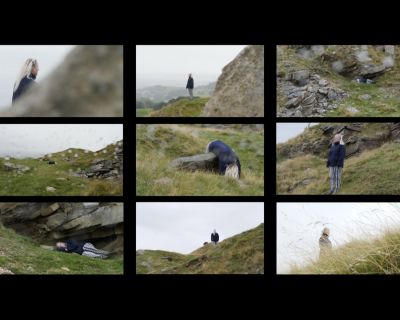
This experimental installation film explores Environmental Dance as a way of engaging nature through movement. Made in collaboration with Dr. Gemma Collard-Stokes to be an installation piece, this film documents Gemma’s interactions with various spaces within what used to be a coal mine in Pott Shrigley, Macclesfield.
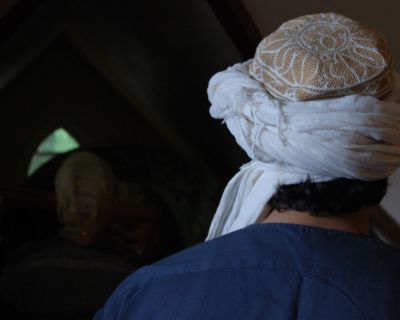
This study explores an Islam envisioned by a specific reform movement that aims to refashion Islamic identity through aesthetic practice. I argue that fragmented communities can experience moments of unity through the creation of a shared sensory experience. Through this, pious arts in the UK are contributing to the creation of a moral space that does not oppose Islam and the West but reconciles divisions through the enchanted self.
An experimental and collaborative documentary on people’s everyday experiences of the weather and seasons in the Calder Valley, West Yorkshire. Part of a research project funded by the Leverhulme Trust and led by Professor Jennifer Mason at the Morgan Centre for Research into Everyday Lives, Department of Sociology, University of Manchester
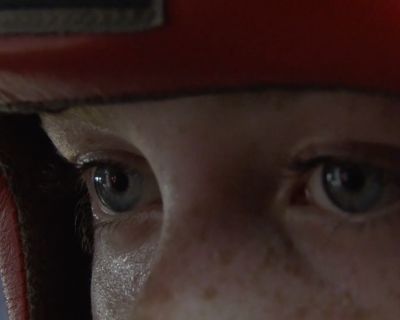
A phenomenological enquiry into the experience of imprisonment. Drawing on anthropologically informed theories of perception and imagination this film explores the relationship between the real and the unreal, the physical and the imagined, and the in- and the outside as rendered through the experience of everyday life in prison.
Rounds is a film that explores notions of masculinity and the social functions of place from three different generational perspectives in a boxing gym in Newport, South Wales. The film evokes experience in the gym, concentrating on the intense structures and rhythms of a training session that over time shape the pugilist’s sense of self.
Set in Dubrajpur (West Bengal, India) during the summer monsoons of June and July, Niishii is an ethnographic film that attempts to capture the essence of the semi-urban night in a small town from its pre-electrification years as a village before 1958 to its radically altered present state.
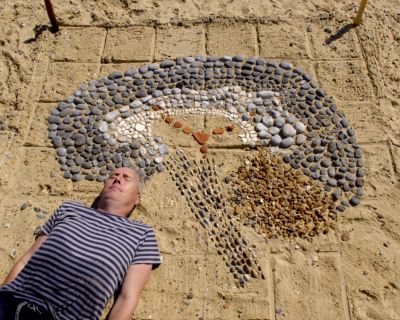
After my father, Ian, suffered two brain hemorrhages in 2012, the world as he knew it became completely transformed. He faces long-term neurological problems related to speech, memory, comprehension and fatigue. In the film we explore how his relationships with people and everyday life has changed, how he actively continues to make sense of his new perceptual and imaginative world.
This photographic audio-documentary tells the story of the brief journey that a small group of refugees took from Milan to Calais. One of the objectives of this project was to give an alternative representation of refugee experiences to those produced by national and international official media, most of which reflect and enhance the growing xenophobic tendency that accentuates a sense of otherness and alienation by cultivating popular feelings of fear or pity.
A collaborative project exploring the heard world of one farming family whose organic holding is now encircled by an international airport in Narita, Japan. The project went on to become a CD-book, a touring film and a gallery installation.